APPLICATIONS & PRACTICE
TPES in Practice: From Understanding People to Supporting Action
How can TPES help you select and lead people, support students, or organize institutional expertise? Explore concrete scenarios and workflows to see how personality, competencies, assessment, and AI work together to support action.
Inside the Report: See Where Talent Development Begins
Go beyond the methods: see how a report leads to the next step
Move from a 14-dimensional personality combination to eight work domains, 12 core occupational competencies, and personal development strategies. This reading example shows how analysis can become a starting point for career exploration, coaching conversations, and competency development.
Read the Full Application ExampleFrom Understanding Yourself to Making Your Own Way
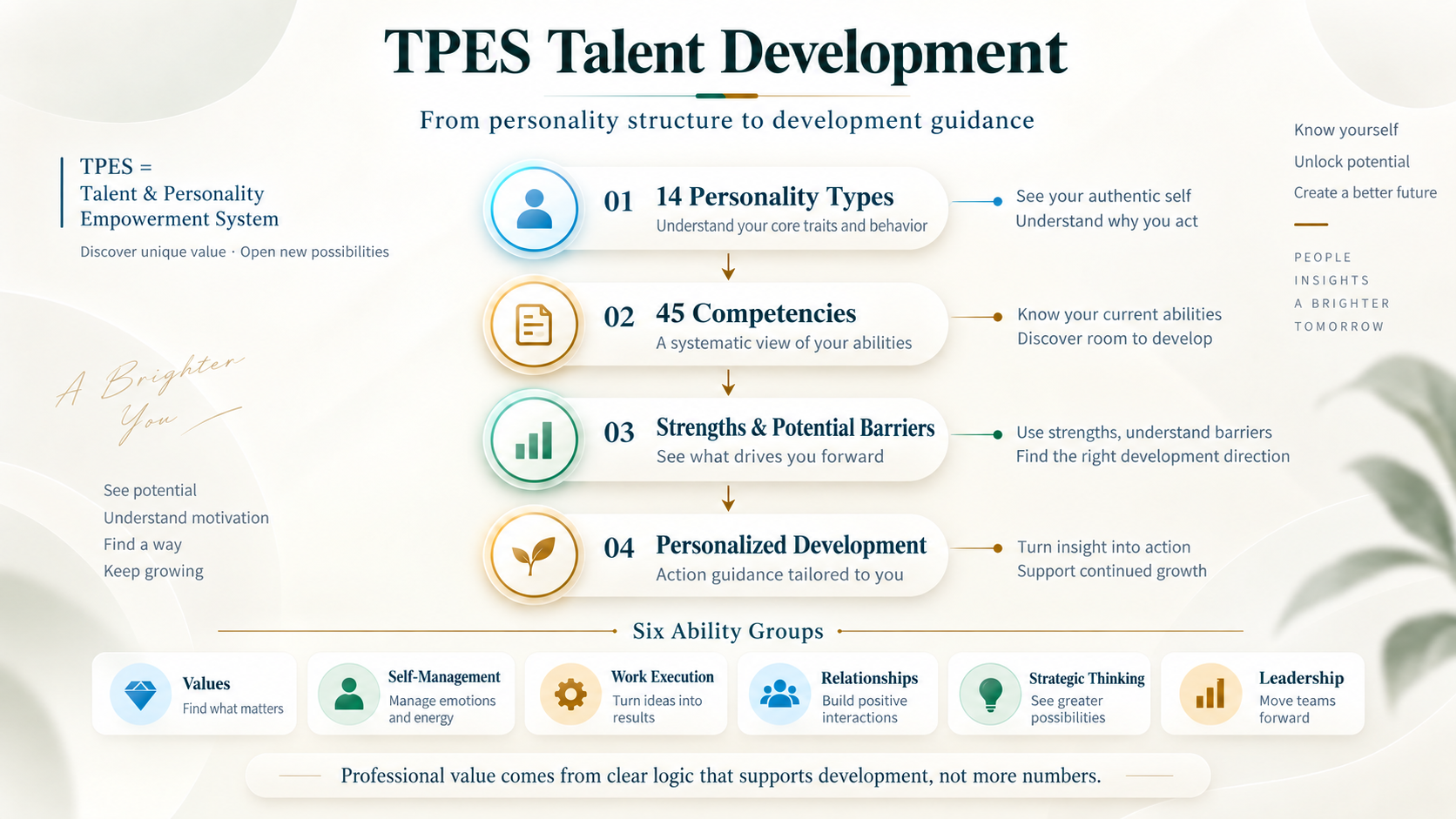
Personality reveals how you see the world, competencies help you accomplish tasks, and development suggestions bring both into real life.
View the Full DiagramApplication Example 1: How Does a Talent Review Lead to Development Action?
The Challenge
Managers recognize differences in team members' performance but struggle to turn impressions into shared development priorities. Someone may be seen as 'having potential' without clarity about which behavior to develop.
Required Data
Role tasks, assessment and competency information, work results, manager observations, and the person's own preferences. Mark missing information explicitly; do not use AI to turn gaps into a complete story.
How the Method Is Applied
Use role requirements to organize competencies and behaviors, then bring known information into a shared discussion framework. AI helps prepare summaries and follow-up questions; managers and professionals check which judgments have evidence and which still need verification.
Possible Outputs
A few clear development priorities, one work-based practice task, the manager support needed, and a review date. For example, practice organizing risks and options before project meetings, and observe whether this helps initiate cross-department coordination earlier.
How to Tell Whether It Helps
Look for changes in subsequent behavior and outcomes, not simply a more attractive report. Review task completion, managers' observations, and the person's experience, and revise initial judgments when needed.
Read the Full Application ExampleApplication Example 2: How can students move from assessment to career exploration?
The Challenge
Students receive personality and competency results but do not understand how they relate to future work. Schools also do not want a single assessment to lock students into a field of study or job role.
Required Data
Student assessments authorized for use, enterprise role descriptions, coursework and practical training tasks, and students' interests and views on possible directions.
How the Method Is Applied
Translate job requirements into competencies and behaviors, then offer several directions worth exploring. Arrange projects, practical work, interviews, or work placements so students gain experience they can use to make judgments.
Possible Outputs
A personal exploration checklist, competencies to test across different directions, the next practical task, and behaviors teachers and industry mentors can observe.
How to Tell Whether It Helps
Look beyond recommendation scores: Can students explain their choices more clearly? Have they completed their exploration? How does practical training performance support or revise their original direction?
Read the Full Application ExampleApplication Example Three: How Can Institutions Bring Knowledge into Their Services?
The Challenge
New consultants often need to ask the same questions, external explanations vary, and experienced consultants repeatedly spend time organizing materials.
Required Data
Approved service descriptions, teaching materials, FAQs, de-identified cases, role permissions, and commitments that must not be made.
How the Method Is Applied
Choose one service workflow, organize content that may be referenced, and configure the relevant agents. Have the team test them and record errors, information gaps, and situations requiring a human handover.
Possible Outputs
A body of knowledge with assigned owners, a more consistent approach to service preparation, and clear conditions for human handover.
How to Tell Whether It Helps
Check whether team members can find the right information more easily, whether repeat questions decrease, and whether external content is still approved by the appropriate people.
Read the Full Application ExampleFollow the application process to find your starting point
Cases with actual deliverables can show what analysis or planning was completed. But 'producing a report' is not the same as 'proving an improvement in performance or employment rates.' Claims about outcomes require an appropriate observation period, basis for comparison, and supporting data.
When students, employees, or clients are involved, check whether the content could identify them even after names are removed. Public versions should include only necessary information and should not directly display personal reports or private conversations.
Want to discuss a similar application?
Tell us whom you serve, the task you want to address, the data you have, and the outcomes you hope for. We can first define a small-scale use case, then discuss whether you need assessments, platform configuration, or consultant support.
COMMON QUESTIONS
Questions You May Have
Find useful answers to the questions in front of you.
How do application scenarios differ from report-reading examples?
Application scenarios show how businesses, educators, coaches, and institutions can use TPES. Report-reading examples show actual inside pages from personality and occupational competency reports, revealing how analysis leads to development recommendations. Scenario descriptions are not records of results achieved by specific clients.
How do brand infographics differ from personal assessment reports?
The brand infographics explain the TPES framework, history, and development logic. The report-reading examples on the assessment page show excerpts from report pages without names or contact details, illustrating personality combinations, work areas, competencies, and development strategies. Actual deliverables depend on the assessment and service version selected.
TAKE YOUR NEXT STEP
Give Your Next Step a Clearer Direction
Tell us your role, needs, and region,
We will help you find the right TPES platform, service, or partnership contact.